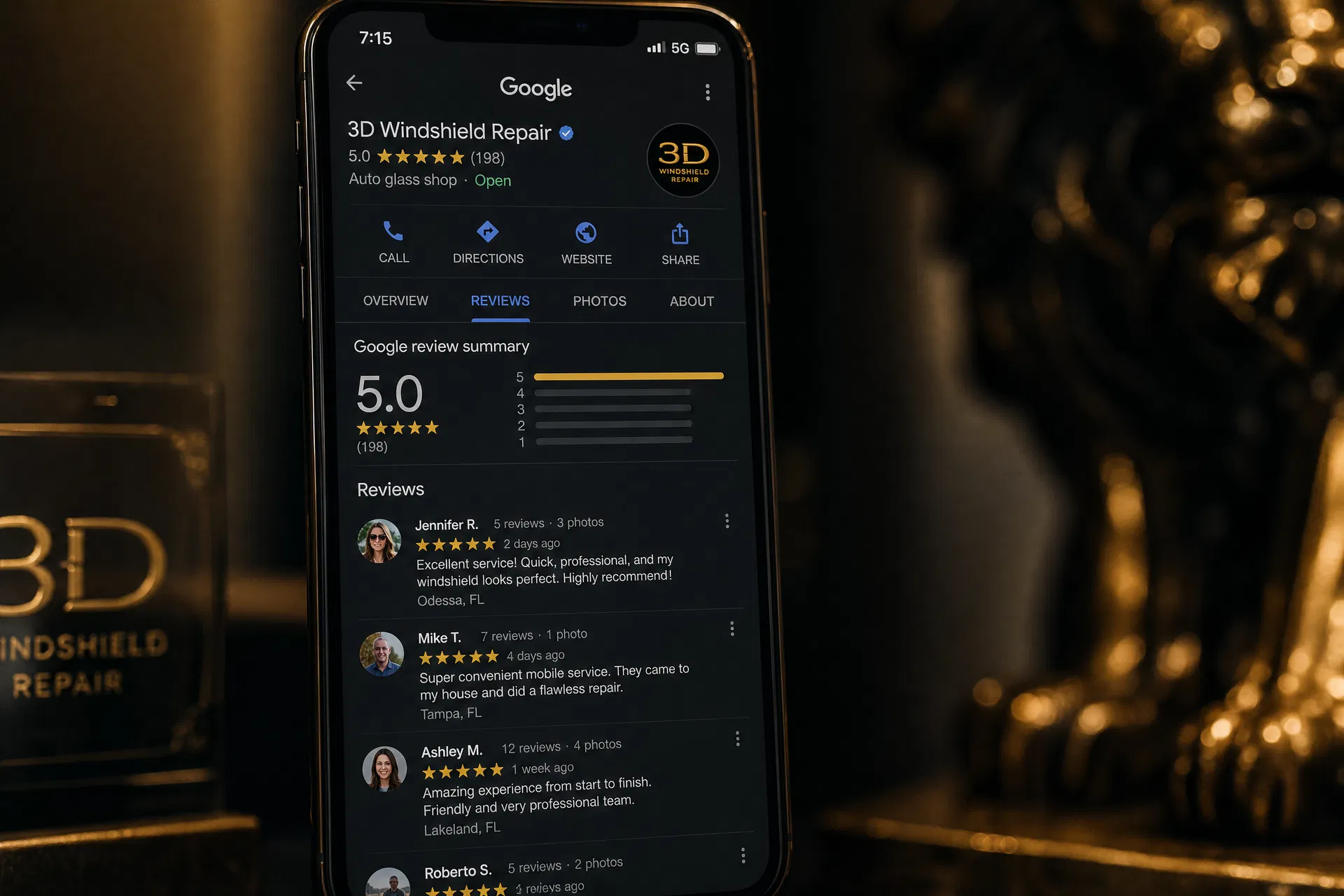
Reviews are the closest thing to a ranking cheat code a local business has, because they move two of Google’s three ranking factors at once — relevance (the words customers use) and prominence (the volume and freshness of feedback). They also do most of your selling for you: a homeowner deciding between two AC companies almost always picks the one with more recent, higher-rated reviews. The problem is that asking feels awkward. Here’s how to make it a system instead of a favor.
Why a steady drip beats a big batch
Forty reviews collected last spring look frozen; six new ones every month look alive. Google weighs recency, and so do customers — a review from this week carries more trust than one from two years ago. The goal isn’t a one-time push to a round number. It’s a small, reliable flow that never stops.
The system: ask at the moment of relief
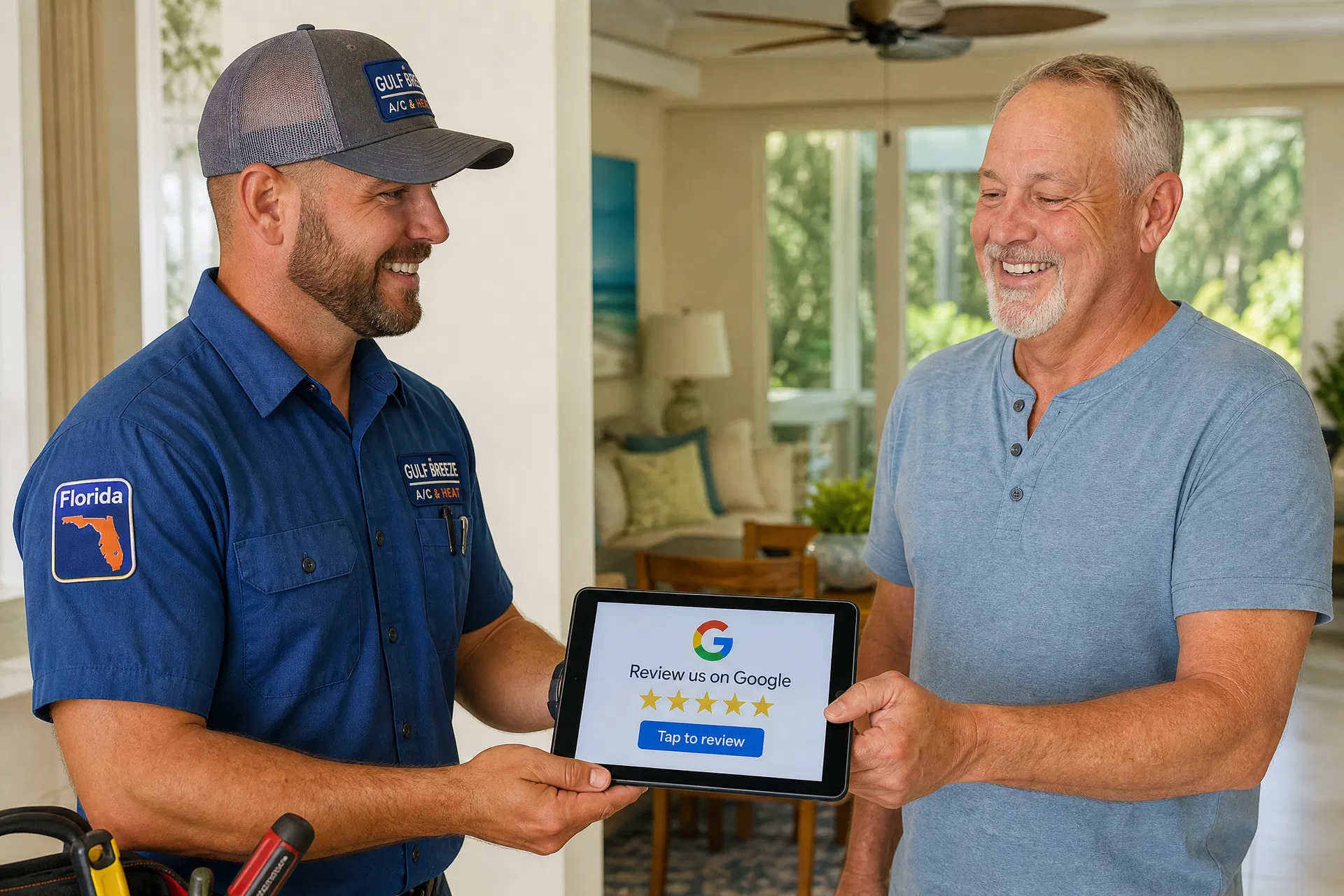
The best time to ask is the instant a customer is happiest — right after you’ve fixed the problem, while the relief is fresh. For a service business that’s the moment the tech wraps up the job and the AC is blowing cold again. Build the ask into that moment so it happens every time, not just when someone remembers.
A simple version:
- The tech mentions it in person — “If we did right by you today, a quick Google review really helps our small business.”
- An automated text follows within the hour with a direct link to your review form, while the experience is still fresh.
- One polite reminder a day or two later if they didn’t act — and then you stop.
Automating steps 2 and 3 is what turns this from “something we mean to do” into something that reliably happens. A review-request workflow tied to your job-completion process removes the awkwardness and the forgetting.
Make leaving a review effortless
Every step of friction costs you reviews. Use a short direct link (or QR code on the invoice and truck) that drops the customer straight onto your Google review form. Don’t make them search for your business, scroll, and hunt for the button — most won’t.
Nudge for useful content (without scripting)
You can’t write reviews for customers, and you shouldn’t. But you can shape them with a gentle prompt: “If you have a second, mentioning the service we did and your city really helps others find us.” When a review naturally says “fast water-heater repair in Naples,” that phrase becomes a relevance signal for exactly the searches you want to win.
Respond to every review — yes, every one
Replying signals an active, accountable business to both Google and future customers. Thank the positive ones briefly and specifically. For negative reviews, stay calm, acknowledge the concern, and move the detail offline. A measured response to a one-star review often impresses readers more than the complaint hurts you.
What not to do
- Don’t buy or fake reviews. Google detects review spam, and it’s one of the fastest routes to a suspension.
- Don’t gate reviews by only asking happy customers through a filter — it violates Google’s policies.
- Don’t ask in bulk all at once. A sudden spike looks unnatural; a steady cadence looks real.
Where most owners get stuck
The system is simple; running it after every single job, forever, is where it falls apart — because the business owner is busy doing the actual work. That’s exactly what we automate as part of Google Business Profile management: the request, the timing, the reminder, and the response workflow, so reviews accumulate without you thinking about it. Want to see how your current review velocity stacks up against the businesses outranking you?
Further Reading
- The Complete Guide to Google Business Profile for Florida Service Businesses — where reviews fit in the bigger ranking picture.
- Why Your Florida Service Business Isn’t Showing Up on Google Maps — when weak reviews are the cause.
- Local SEO Plans for Florida Service Businesses — reviews as one part of a complete local strategy.
- Google Business Profile Help — official policies on reviews.